Ganga Aarti, Varanasi – The Divine Dance of Fire and Faith
Every evening, as the sun sinks into the Ganges and bells echo across the ghats, Varanasi transforms into a theatre of devotion — the Ganga Aarti. It’s not just a ritual; it’s an emotion that defines the city’s heartbeat.
Thousands gather at the riverbanks to witness this grand offering to Ma Ganga, the river considered both goddess and lifeline. Among all famous places in Varanasi, the Ganga Aarti remains the most enchanting — a spectacle of light, sound, prayer, and soul. Whether you’re a pilgrim, photographer, or traveller, it’s one of the most unforgettable Varanasi visit places you’ll ever experience.
Where Is Ganga Aarti Held? (With GPS Coordinates)
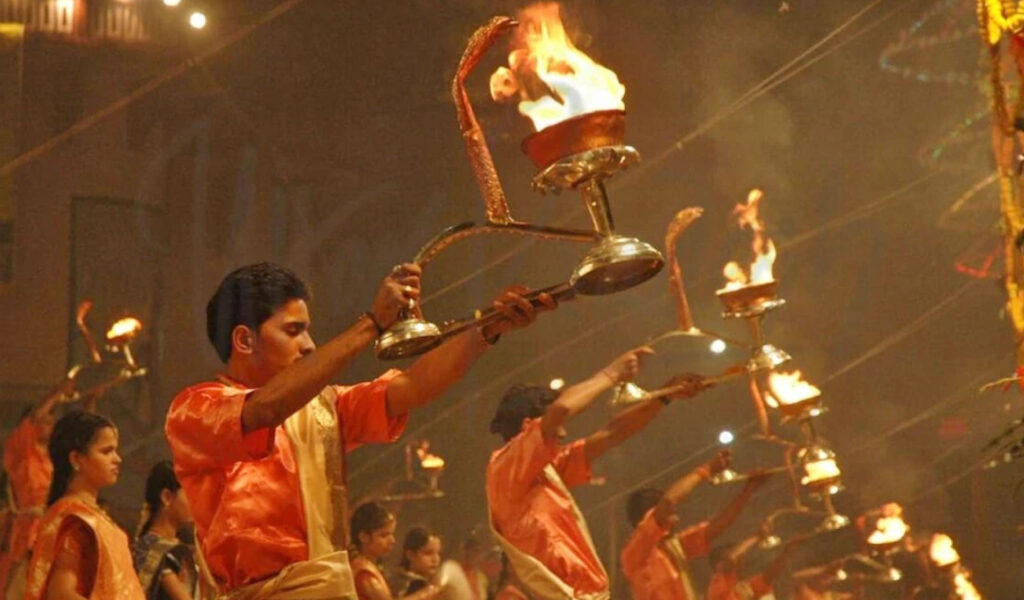
📍 Dashashwamedh Ghat, Varanasi
Coordinates: 25.3075° N, 83.0105° E
The grand Ganga Aarti is performed daily at Dashashwamedh Ghat, near the Kashi Vishwanath Temple, right in the heart of Varanasi. A smaller but equally soulful version also takes place at Assi Ghat, especially during the morning hours.
Dashashwamedh Ghat, one of the oldest and most famous places in Varanasi, is easily accessible by rickshaw or on foot from Godowlia Chowk. If you’re accompanied by a tour guide in Varanasi, they’ll help you navigate the busy lanes and get a good viewing spot — either from the steps, boats, or rooftop cafés facing the river.
Mythological & Historical Significance
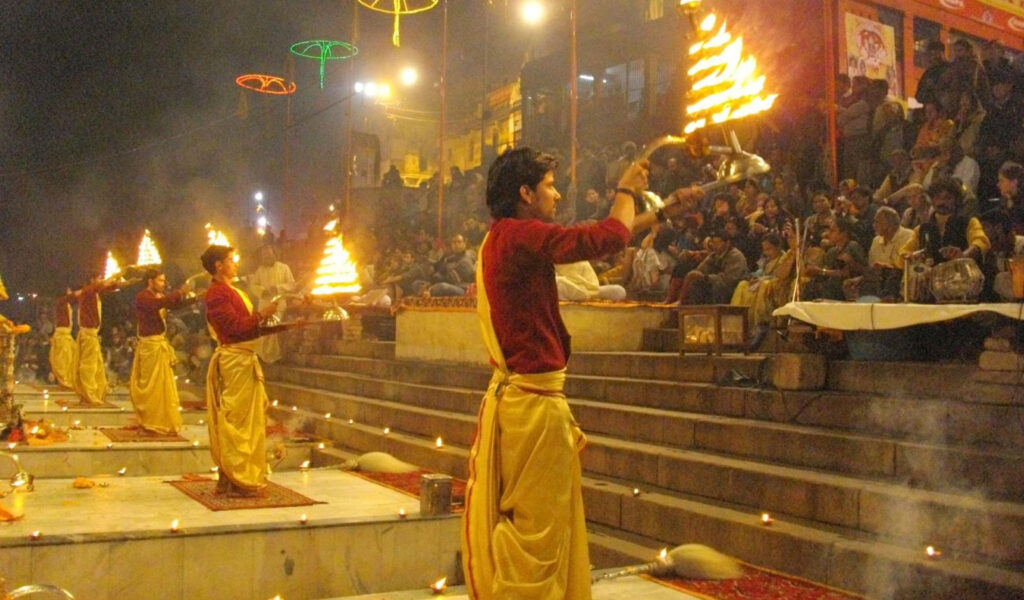
The Ganga Aarti is deeply rooted in Hindu mythology. According to legend, the ritual was initiated by Adi Shankaracharya to honor Ganga Devi, who descended from heaven to purify humanity. The word “Aarti” itself means an offering of light — symbolizing the soul’s surrender to the divine.
The Dashashwamedh Ghat itself holds sacred value: it is said that Lord Brahma performed ten horse sacrifices (Dash-Ashwa-Medh) here to welcome Lord Shiva. Since ancient times, sages and kings have performed prayers on these very steps, believing that worshipping Ganga washes away sins and grants liberation (moksha).
Today, the evening aarti continues this timeless rhythm — blending ancient Sanskrit chants, temple bells, and fire-lit lamps into an experience that connects heaven and earth.
Architecture & Setting
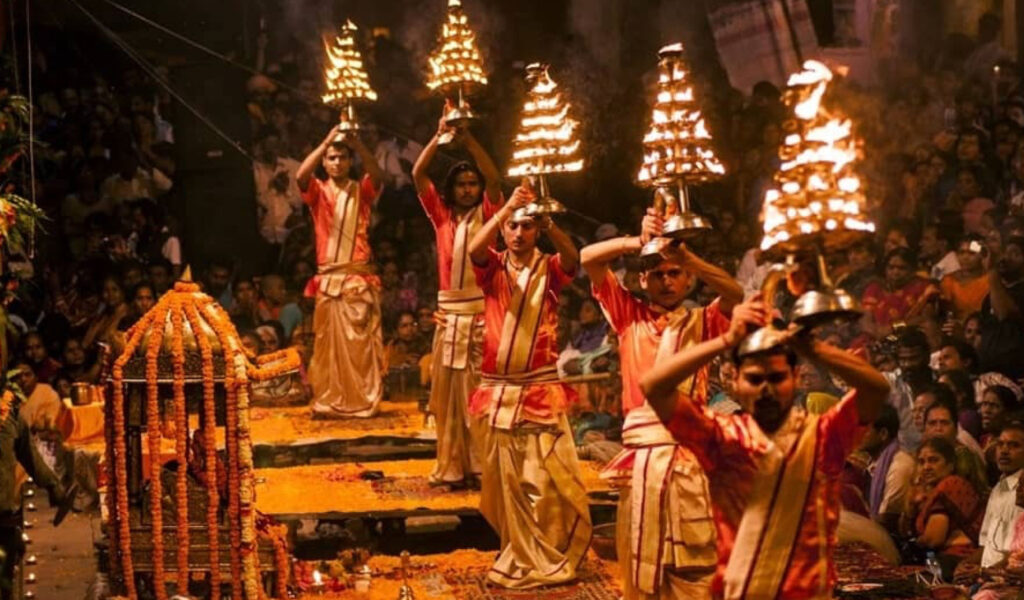
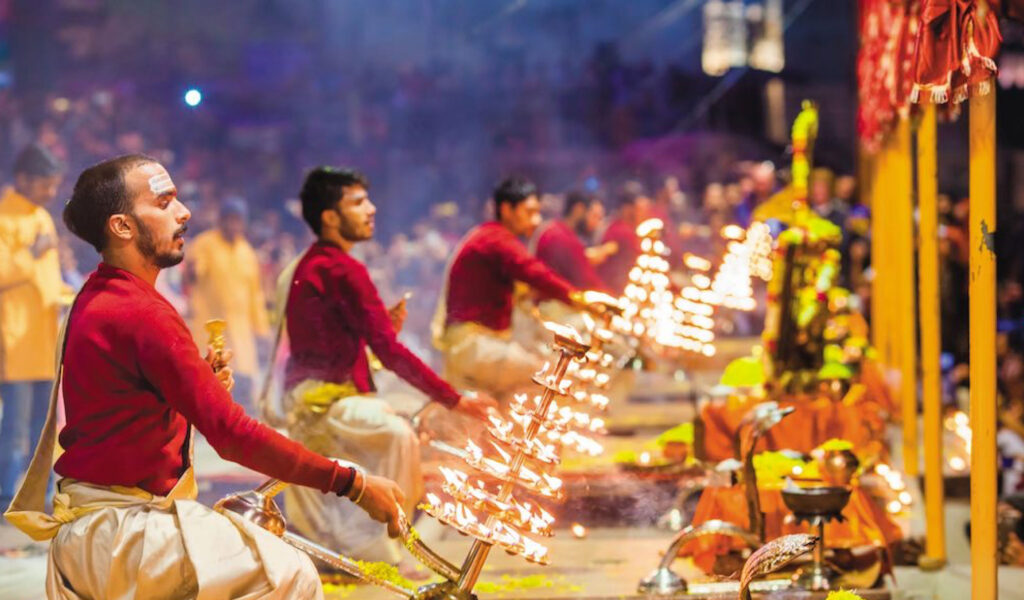
The Ganga Aarti isn’t a temple structure but a ritual performance space. The ghat transforms into a vast open-air amphitheatre with a multi-tiered platform where young priests (pandits) in saffron robes conduct the ceremony in synchronized rhythm.
Each priest holds a multi-layered brass lamp (deepam), conch shells, and incense burners. The lamps’ golden flames reflect in the Ganga’s ripples, creating a breathtaking view.
Behind the priests stand huge bells and an altar adorned with flowers and diyas (oil lamps). The setting sun, the smell of sandalwood, and the murmur of prayers together make this the most divine visual spectacle among all places of visit in Varanasi.
What You’ll See & Do at Ganga Aarti
Arrive around 5:30 PM (winter) or 6:00 PM (summer) to grab a good spot. The Aarti usually starts after sunset and lasts about 45 minutes.
You’ll first hear conch shells blowing, followed by rhythmic chants and devotional songs. Seven or more priests begin moving the massive brass lamps in perfect harmony — creating circles of fire that rise like golden halos against the night sky.
You can watch from:
•The steps (ghat) — free but crowded.
•Boats on the river — the most magical experience.
•Nearby rooftop cafés — peaceful, with great photo angles.
For first-time visitors, hiring a tour guide in Varanasi helps you understand the chants, rituals, and timings. Don’t miss buying a small diya (lamp) to float on the river afterward — it’s said to bring blessings and peace.
How to Reach Dashashwamedh Ghat
•By Air: The nearest airport is Lal Bahadur Shastri International Airport (≈ 25 km). Take a prepaid taxi to Godowlia Chowk.
•By Train: From Varanasi Junction (Cantt), it’s 5 km by rickshaw or cab.
•By Road: Dashashwamedh Ghat is accessible by autos and e-rickshaws but not by large vehicles — the inner lanes are pedestrian-only.
Ask your tour guide in Varanasi to arrange drop-off and pickup at Godowlia, as traffic gets very dense during evening aarti hours. You can also walk from Assi Ghat (2.5 km) if you wish to experience the riverfront life.
Nearby Places to Visit
The area around Dashashwamedh Ghat is packed with spiritual and cultural treasures. Combine your visit with:
•Kashi Vishwanath Temple – The holiest Shiva temple, just 300 m away.
•Manikarnika Ghat – The sacred cremation ground symbolizing life and liberation.
•Assi Ghat – Morning aarti and yoga sessions by the Ganga.
•Ganga Mahal & Rana Mahal Ghats – Perfect for photography and heritage walks.
These together form the sacred circuit of famous places in Varanasi, capturing the essence of devotion, history, and daily life.
Best Time to Visit & Travel Tips
Best Time: October to March offers pleasant evenings for the Aarti. The monsoon season (July–September) brings high water levels — beautiful but sometimes crowded.
Tips:
•Arrive early (by 5:30 PM) for a good seat.
•Carry a scarf or mask — the area can get smoky during the rituals.
•Avoid standing too close to the priests or crossing ropes.
•For the best view, hire a boat from Assi Ghat or Dashashwamedh Ghat before 5:30 PM.
•Photography is allowed but switch off flash.
A tour guide in Varanasi can pre-book boat spots, explain verses, and help you avoid tourist scams.
Suggested Itinerary
Best Time: October to March offers pleasant evenings for the Aarti. The monsoon season (July–September) brings high water levels — beautiful but sometimes crowded.
Tips:
•Arrive early (by 5:30 PM) for a good seat.
•Carry a scarf or mask — the area can get smoky during the rituals.
•Avoid standing too close to the priests or crossing ropes.
•For the best view, hire a boat from Assi Ghat or Dashashwamedh Ghat before 5:30 PM.
•Photography is allowed but switch off flash.
A tour guide in Varanasi can pre-book boat spots, explain verses, and help you avoid tourist scams.
FAQ – Ganga Aarti, Varanasi
Q1. What are the timings for the Ganga Aarti at Dashashwamedh Ghat?
A: The evening Aarti normally starts just after sunset and lasts about 45 minutes. For example: in winter it begins around 6:30 PM, and in summer closer to 7:00 PM.
Q2. Do I need to pay or buy a ticket to attend?
A: No mandatory entry fee is required — the ceremony is open to all. Occasionally, “VIP seats” or boat rides are offered for a charge, but general entry is free.
Q3. Which is the best spot to view the Aarti?
A: The main venue is Dashashwamedh Ghat — the most famous spot for the evening Aarti. For a quieter experience, the Aarti at Assi Ghat (especially morning) is recommended.
Q4. Are boat rides available so I can view from the river?
A: Yes — many visitors choose boat rides on the Ganga during the Aarti for a unique vantage point. However, you should book early and be aware of crowds.
Q5. Is the Aarti accessible year-round?
A: Yes — the Ganga Aarti takes place every day. However, seasonal factors like monsoon water levels may affect viewpoints or boat availability.
Q6. Is it accessible for people with mobility issues?
A: Yes, basic accessibility is provided, though the ghats can be crowded and involve steps. It’s advisable to arrive early if mobility is a concern.
Q7. What should one keep in mind when attending the Aarti?
A: Arrive early (at least 30-60 minutes before start), dress modestly, secure your belongings, avoid flash photography during ritual, and be respectful of devotees and space. Some vendors may try to overcharge for “priority” spots.
Q8. Can I attend morning Aarti instead of evening?
A: Yes — morning Aarti at Assi Ghat or other ghats is possible for early risers and offers a quieter, reflective experience.
Q9. Are there special festival or full-moon versions of the Aarti?
A: Yes — on major occasions like Dev Deepawali, Ganga Dussehra and Kartik Purnima the Aarti is larger, more elaborate, and the ghats are decorated with thousands of lamps.
Q10. Can I hire a guide for the Ganga Aarti experience?
A: Yes — local guides or agencies provide commentary, arrange boat rides or seats, and help navigate crowds. Having a tour guide in Varanasi adds depth and convenience to the experience.
Conclusion
The Ganga Aarti of Varanasi is not just a ceremony — it’s the city’s soul on display. As the priests raise flaming lamps and the river glows with floating diyas, you’ll feel time itself pause.
It’s here that devotion meets spectacle, where ancient hymns meet flowing waters. Among all famous places in Varanasi, this is the one that truly captures the essence of India — spiritual, timeless, and alive.
Whether you’re watching from the ghats or a quiet boat, the Ganga Aarti will stay with you — like the reflection of a flame that never fades. 🌊🕯️
Recommended Tour
Related Blogs