Dhauli, Odisha – A Historic Peace Landmark Among the Top Places to Visit in Odisha
Perched gracefully on the banks of the Daya River, Dhauli is one of the most historically powerful and spiritually significant destinations in eastern India. Known as the site of the legendary Kalinga War, Dhauli represents the turning point in Emperor Ashoka’s life — from conquest to compassion. Today, it stands as a symbol of peace, making it one of the most meaningful places to visit in Odisha.
With its serene Shanti Stupa (Peace Pagoda), ancient rock edicts, and panoramic hilltop views, Dhauli beautifully blends history, spirituality, and scenic charm. It is a must-include stop in most tour places in Odisha, especially for travelers exploring Bhubaneswar and Puri.
Where Is Dhauli? (with GPS Coordinates)
Dhauli is located about 8 km south of Bhubaneswar, the capital city of Odisha. It lies along the banks of the Daya River and is easily accessible by road from Bhubaneswar and Puri.
📍 GPS Coordinates: 20.1920° N, 85.8325° E
Its proximity to Bhubaneswar makes it one of the most convenient tourist attractions in Odisha for day trips. The hilltop location offers sweeping views of lush green plains and the peaceful Daya River — a striking contrast to the bloodshed that once occurred here during the Kalinga War.
Because of its accessibility and historical importance, Dhauli is frequently included in Odisha sightseeing circuits and cultural itineraries.
Mythological & Historical Significance
Dhauli is historically famous as the site of the Kalinga War (261 BCE) between Emperor Ashoka and the state of Kalinga. The brutal war caused massive destruction and loss of life. It is believed that witnessing the suffering on these very plains deeply affected Ashoka, leading him to renounce violence and embrace Buddhism.
The transformation of Ashoka from a conqueror to a messenger of peace is one of the most remarkable moments in Indian history. Dhauli thus marks the beginning of his journey as “Ashoka the Great,” who later spread Buddhism across Asia.
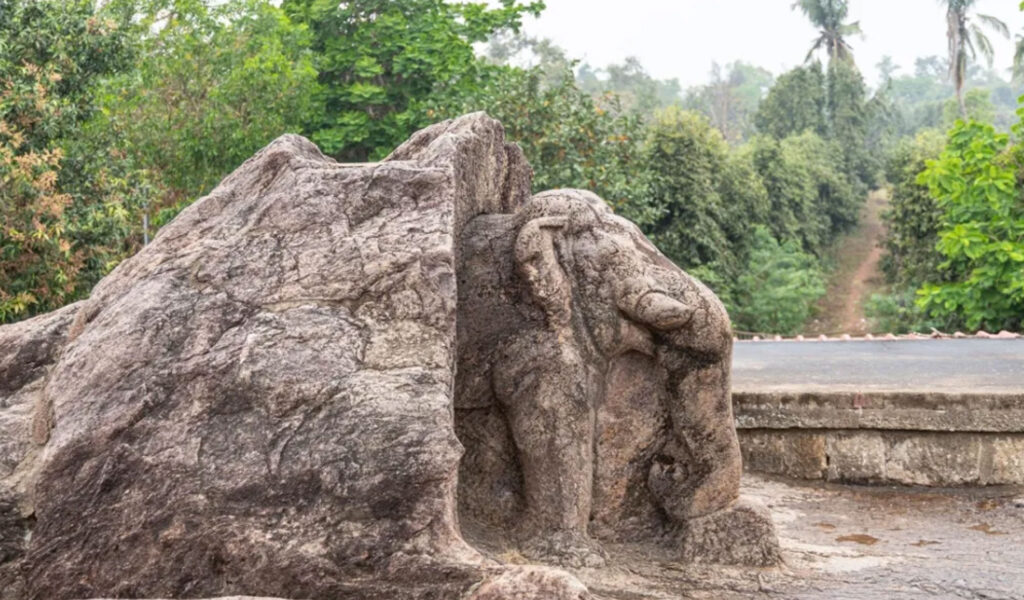
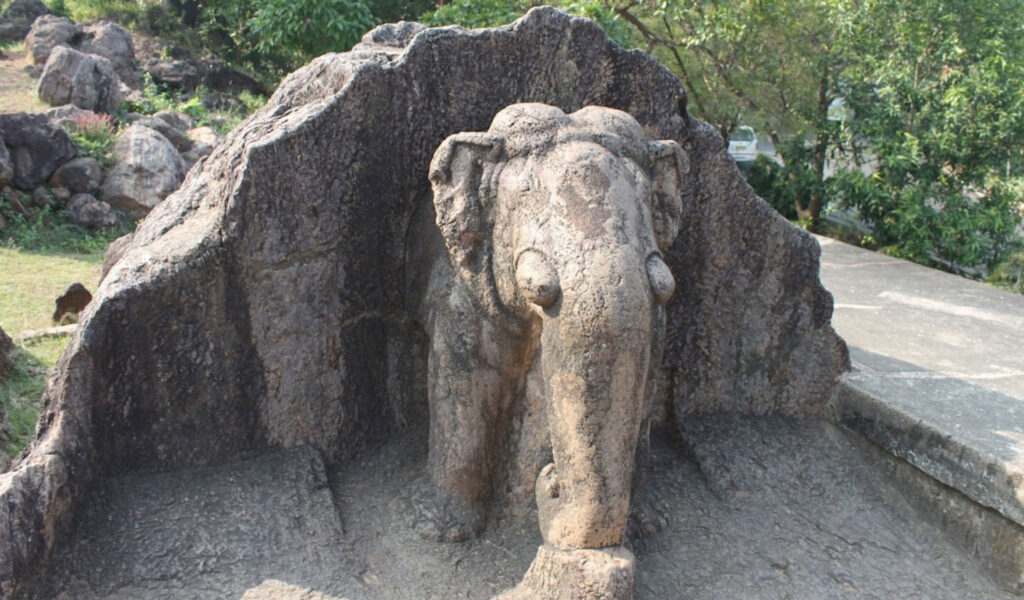
The site also features Ashokan rock edicts, inscriptions carved in stone that promote non-violence, morality, and compassion. These edicts make Dhauli a key historical tourist spot in Odisha and an essential location for students of history and culture.
Architecture
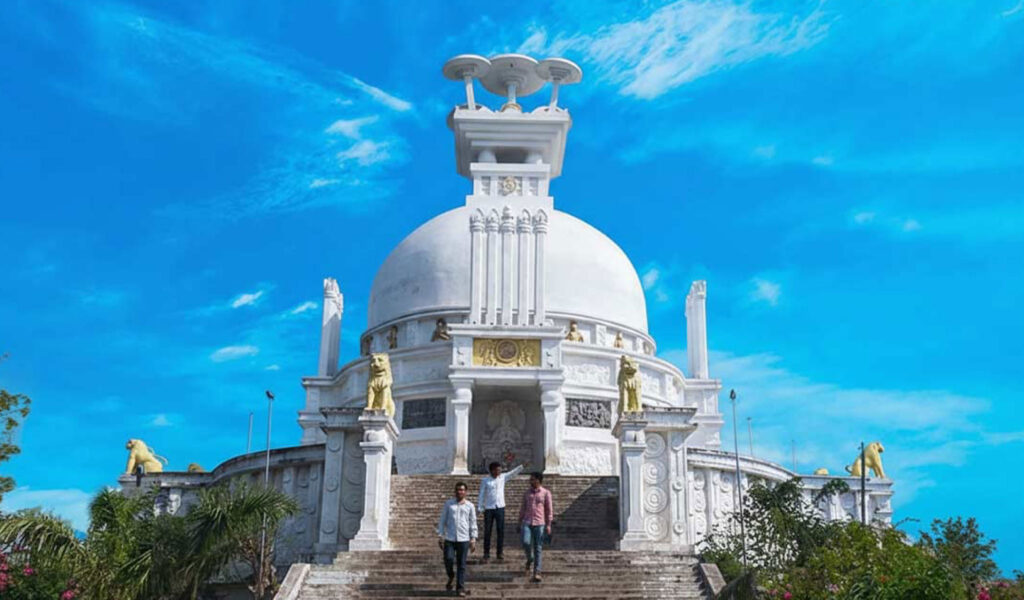
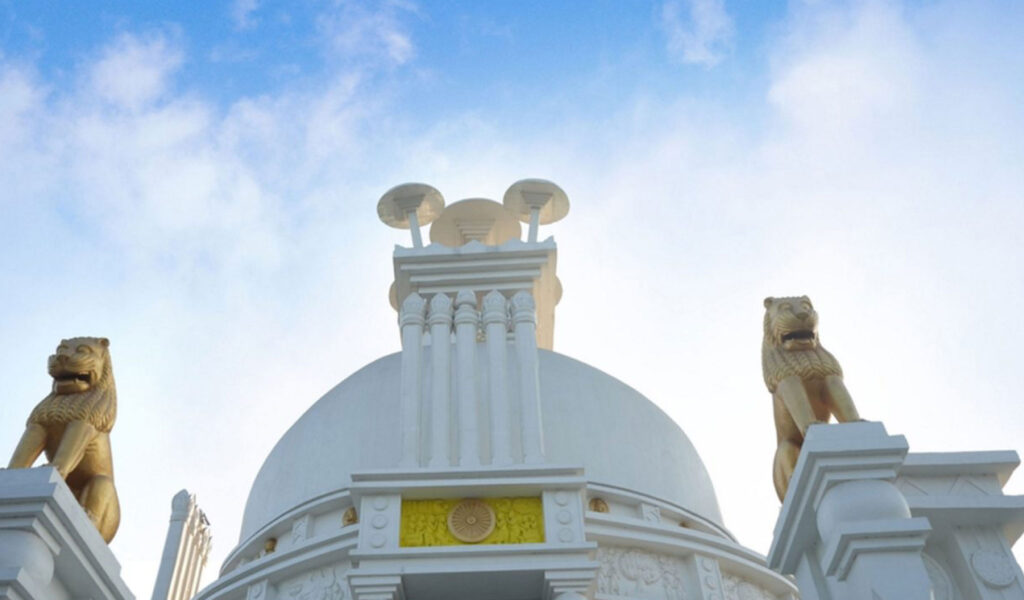
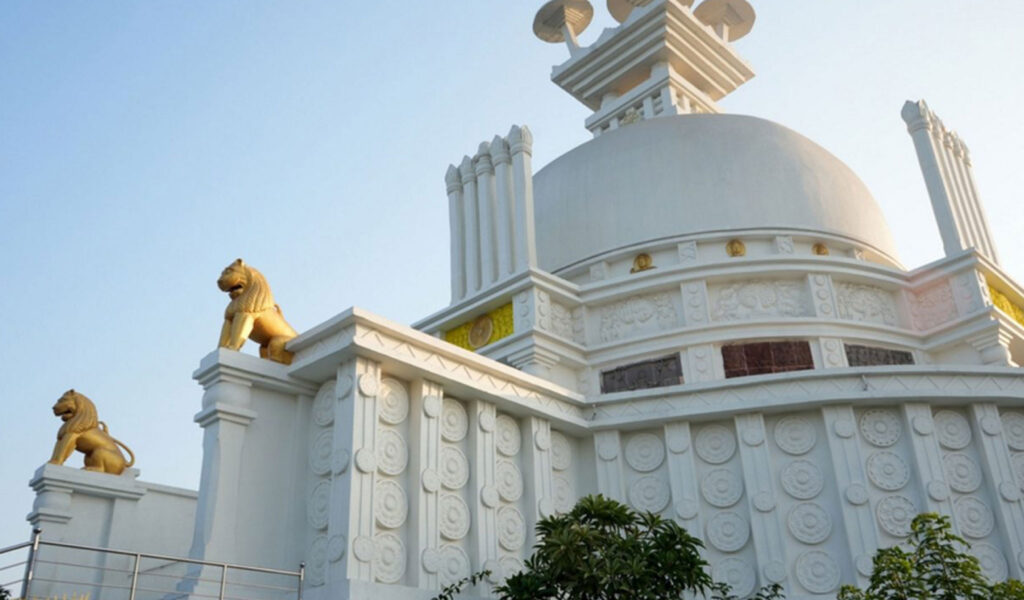
The most prominent structure at Dhauli is the Shanti Stupa (Peace Pagoda), built in 1972 by the Japan Buddha Sangha and the Kalinga Nippon Buddha Sangha. The white dome stands elegantly atop the hill, symbolizing peace and harmony.
The stupa features statues of Buddha in different postures and intricate carvings depicting scenes from his life. Its gleaming white surface against the green surroundings creates a striking visual. Nearby, the Ashokan edicts are carved into rock faces, showcasing early Brahmi script and Mauryan craftsmanship.
What You’ll See & Do at Dhauli
A visit to Dhauli offers a mix of history, spirituality, and scenic beauty. Begin by exploring the Shanti Stupa, walking around the circular platform and admiring the detailed sculptures. The peaceful ambiance makes it ideal for meditation and quiet reflection.
Next, head to the Ashokan rock edicts, where you can observe inscriptions that communicate messages of non-violence and ethical governance. These ancient carvings are among the earliest written records in India.
From the hilltop, enjoy panoramic views of the Daya River and surrounding countryside, especially beautiful during sunset. Photography enthusiasts will love capturing the contrast of white stupa against green fields.
Because of its layered experience, Dhauli remains one of the most enriching tour places in Odisha for history lovers and spiritual seekers alike.
How to Reach Dhauli
Reaching Dhauli is simple due to its proximity to Bhubaneswar:
•By Air: The nearest airport is Biju Patnaik International Airport (Bhubaneswar), about 10 km away.
•By Rail: Bhubaneswar Railway Station is well connected to major Indian cities.
•By Road: Local taxis, auto-rickshaws, and buses operate frequently from Bhubaneswar and Puri.
Most Odisha sightseeing tours include Dhauli as part of a Bhubaneswar–Puri–Konark circuit, making it one of the most accessible tourist attractions in Odisha.
Nearby Places to Visit
Dhauli is surrounded by several major attractions:
•Lingaraj Temple – A grand 11th-century temple dedicated to Lord Shiva.
•Udayagiri and Khandagiri Caves – Ancient Jain caves with carvings and inscriptions.
•Konark Sun Temple – A UNESCO World Heritage Site famous for its chariot-shaped architecture.
•Puri Beach – A popular coastal getaway.
These iconic destinations make Dhauli part of a larger circuit of must-see places to visit in Odisha.
Best Time to Visit & Travel Tips
The best time to visit Dhauli is between October and March, when the weather is pleasant and suitable for hilltop exploration. Summers can be hot, while monsoons bring lush greenery but occasional rainfall.
Travel Tips:
•Visit early morning or late afternoon for cooler temperatures.
•Carry water and wear comfortable footwear for walking uphill.
•Maintain silence near the stupa, as it is a place of meditation.
•Combine Dhauli with nearby attractions for a full-day trip.
These practical tips enhance your experience at this peaceful tourist spot in Odisha.
Suggested Itinerary (Half-Day Plan)
Morning: Start at Dhauli early to enjoy peaceful views and explore the Shanti Stupa.
Late Morning: Visit Ashokan rock edicts and learn about the Kalinga War.
Afternoon: Head back to Bhubaneswar to visit Lingaraj Temple and Udayagiri Caves.
Evening: Relax at Ekamra Haat or drive to Puri if extending your trip.
This itinerary allows travelers to cover one of the most significant tourist attractions in Odisha efficiently.
FAQ – Dhauli, Odisha
Q1. Why is Dhauli famous?
Dhauli is famous as the historic site of the Kalinga War, where Emperor Ashoka witnessed the horrors of battle and embraced Buddhism. Today, it’s known for the Shanti Stupa and Ashokan rock edicts promoting peace.
Q2. What is the Shanti Stupa at Dhauli?
The Shanti Stupa (Peace Pagoda) is a white Buddhist monument built by Japanese and local Buddhist organizations. It symbolizes peace, harmony, and Ashoka’s transformation after the Kalinga War.
Q3. Is Dhauli one of the top places to visit in Odisha?
Yes. Dhauli is considered one of the key places to visit in Odisha for its historical importance and spiritual ambiance. It often features on heritage and cultural tourist routes.
Q4. Is there an entry fee for Dhauli?
In most cases, there is no entry fee to explore the Dhauli complex, including the Shanti Stupa and rock edicts. However, parking or guide fees may apply.
Q5. How much time is recommended for visiting Dhauli?
Visitors usually spend 1 to 2 hours at Dhauli, which includes time to see the stupa, read inscriptions, take photos, and enjoy the views.
Q6. Can I see the Kalinga War site at Dhauli?
While the exact battlefield is not excavated, the region around Dhauli is traditionally associated with the Kalinga War. The Ashokan edicts and peace monuments mark its historical context.
Q7. Is Dhauli suitable for children and families?
Yes, Dhauli is family-friendly. It offers open spaces, interesting history, and calm views that can engage visitors of all ages.
Q8. What amenities are available at Dhauli?
Basic amenities include parking, shaded rest areas, and vendors selling refreshments and local snacks near the site.
Q9. When is the best time to visit Dhauli?
The ideal time is October to March, when the weather is mild and comfortable for walking and sightseeing.
Q10. Are there guided tours available at Dhauli?
Yes, local guides and tour operators offer guided walks explaining the Ashokan edicts and the story of the Kalinga War. Many tour places in Odisha packages include a guide for deeper insight.
Q11. Can Dhauli be visited in a half-day trip?
Yes, Dhauli can be easily covered in a half-day when combined with other nearby attractions such as Lingaraj Temple and Udayagiri Caves.
Q12. Are photography and videography allowed at Dhauli?
Yes, photography is allowed throughout the open areas. Visitors should be respectful around inscriptions and the stupa.

Conclusion
Dhauli stands as a powerful reminder that even the bloodiest battles can give birth to compassion and peace. From Ashoka’s transformation to the serene Shanti Stupa overlooking the Daya River, Dhauli remains one of the most inspiring tour places in Odisha.
For travelers seeking meaningful journeys, historical depth, and scenic beauty, Dhauli is truly one of the essential tourist attractions in Odisha — a destination where history whispers lessons of peace to every visitor.