Lingraj Temple

In the heart of Bhubaneswar — the “Temple City of India” — stands the magnificent Lingaraj Temple, one of the most sacred and architecturally stunning tourist attractions in Odisha. Dedicated to Harihara, a combined form of Lord Shiva and Vishnu, this 11th-century shrine is the spiritual soul of the city. With its towering spire, ancient rituals, and peaceful courtyards, the temple transports you into the divine world of Odisha’s vibrant past. For pilgrims, architecture lovers, and culture seekers exploring places to visit in Odisha, Lingaraj Temple is an unforgettable experience.

Where Is Lingaraj Temple? (with GPS Coordinates)

Lingraj Temple

Located in Old Town, Bhubaneswar, the Lingaraj Temple is one of the city’s most visited heritage sites.

GPS Coordinates: 20.2386° N, 85.8334° E

The temple sits amidst hundreds of smaller shrines, tank complexes, and ancient lanes filled with traditional markets. It’s close to other major tourist spots in Odisha, making it easy to combine with visits to other architectural marvels in the city. Bhubaneswar itself forms part of Odisha’s Golden Triangle (Bhubaneswar–Puri–Konark), making Lingaraj Temple a key stop in any cultural itinerary.

Mythological & Historical Significance

Lingraj Temple

Mythology tells that Lord Shiva, pleased with the devotion of King Yayati, chose to reside permanently in Ekamra Kshetra (present-day Bhubaneswar). This is why the city is considered older and more sacred than even Kashi in some Shaivite traditions. The Linga at Lingaraj Temple is said to have self-manifested, reinforcing the temple’s immense spiritual power.

Historically, the temple dates back to the 7th–11th century, with major contributions from the Somavamsi and Ganga dynasties. It represents the climax of Kalinga architectural style. Lingaraj Temple wasn’t just a place of worship—it was a socio-cultural center that shaped the identity of Odisha, its rituals, and its artistic traditions.

Architecture

Lingraj Temple

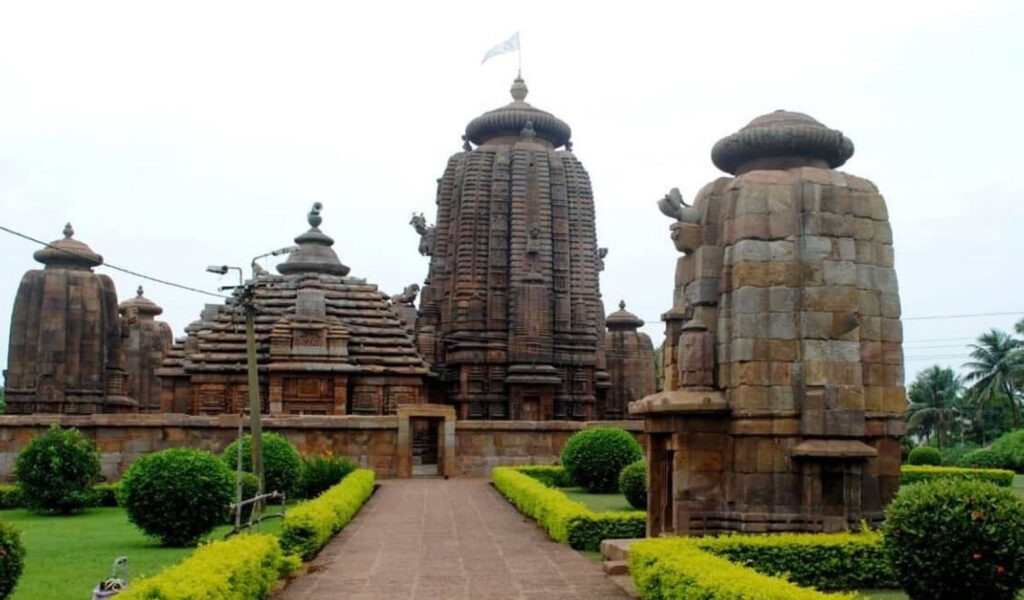
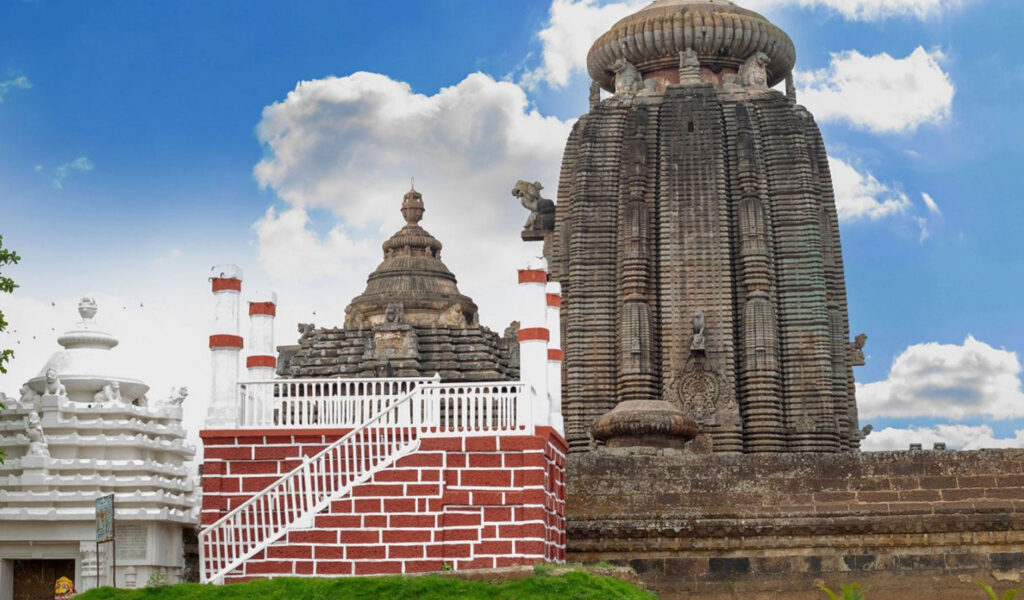
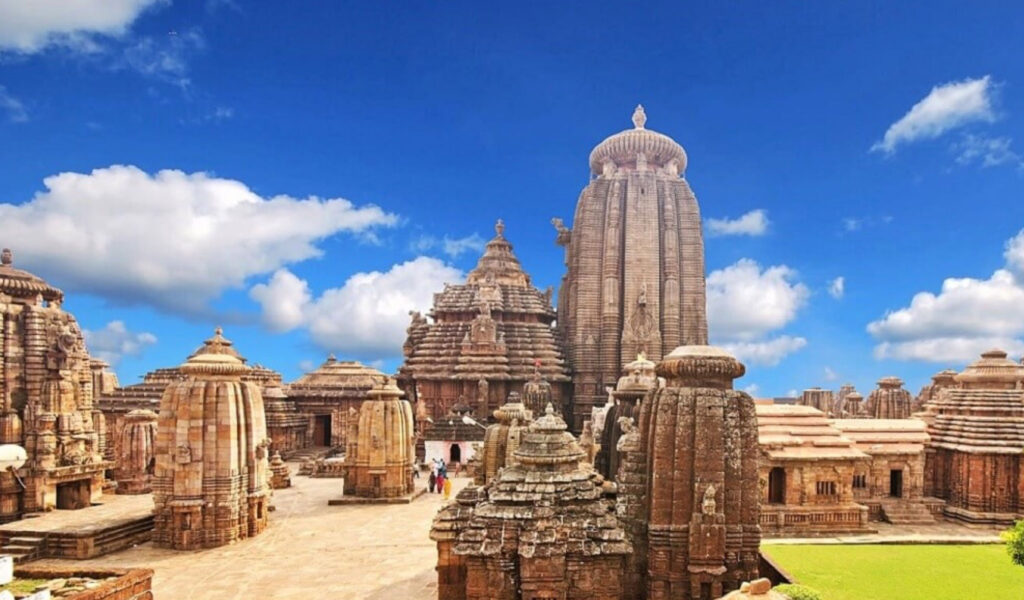
Lingaraj Temple is a masterpiece of Kalinga architecture, built entirely from dark sandstone. The complex includes four main structures:

•Vimana (Sanctum) – the tallest tower, rising to 180 feet, dominating Bhubaneswar’s skyline

Jagamohana (Assembly Hall)

•Nata Mandir (Dance Hall)

•Bhoga Mandap (Offering Hall)

Intricate carvings depicting gods, apsaras, animals, and mythological scenes adorn the walls. The temple complex has over 150 subsidiary shrines, each adding layers of history and devotion. The famous Bindu Sagar Lake, located nearby, plays a major role in temple rituals. During Shivaratri, the entire temple glows with thousands of lamps — a sight that mesmerizes every traveler.

What You’ll See & Do at Lingaraj Temple

Lingraj Temple

A visit to Lingaraj Temple is a spiritually immersive experience. Inside, devotees offer prayers to the revered swayambhu (self-manifested) Linga, constantly bathed with water from a hidden underground spring. Morning and evening aartis are deeply atmospheric, filled with conch echoes and rhythmic bells.

You can explore the Nata Mandir, where classical Odissi performances once took place, and admire the carvings on the massive spire. Don’t miss the Bindu Sagar Lake, where you can watch priests performing rituals. The temple markets outside sell flowers, brass souvenirs, and traditional sweets like khaja.

Since non-Hindus are not allowed inside, a special viewing platform nearby lets everyone admire the grandeur from the outside.

How to Reach Lingaraj Temple

By Air: The closest airport is Biju Patnaik International Airport (Bhubaneswar), located just 4 km away. Auto-rickshaws and taxis are easily available.

By Train: Bhubaneswar Railway Station (6 km away) is well connected to major Indian cities.

By Road: The temple is accessible by city buses, auto-rickshaws, cabs, and rented scooters. The Old Town area is well-developed with parking and visitor facilities.

Visitors often pair their temple visit with heritage walks covering other tour places in Odisha like Rajarani Temple, Mukteshwar Temple, and Kedar-Gouri.

Nearby Places to Visit

Some must-see attractions near Lingaraj Temple include:

•Bindu Sagar Lake – A holy tank believed to contain water from all sacred rivers

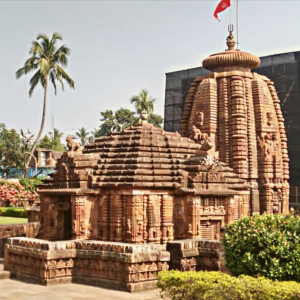
Mukteshwar Temple (1 km) – Known as the “Gem of Odisha Architecture”

Rajarani Temple (2 km) – Famous for its erotic sculptures and red sandstone beauty

Odisha State Museum (4 km) – Home to palm-leaf manuscripts and arts

Khandagiri & Udayagiri Caves (8 km) – Ancient Jain caves offering stunning city views

Ekamra Heritage Walk – A cultural walk through Old Town temples

These nearby landmarks make Bhubaneswar one of the richest tourist spots in Odisha for heritage seekers.

Best Time to Visit & Travel Tips

The best time to visit is October to March, when the weather is cool and pleasant. The biggest festival is Shivaratri, when thousands of devotees gather, and the temple glows with diyas. Visiting in the early morning is ideal for a peaceful darshan.

Travel Tips:

•Photography is not allowed inside the temple.

•Wear modest clothing as it is an active place of worship.

•Non-Hindus can view the temple from an elevated platform outside.

•Arrive early to avoid long queues.

•Try local temple prasad like gaja, khaja, and fresh coconut water outside the gates.

Suggested Itinerary

Day 1:

Arrive in Bhubaneswar → Morning visit to Lingaraj Temple → Explore Bindu Sagar → Visit Mukteshwar & Rajarani Temples → Evening at Ekamra Walks

Day 2:

Visit Khandagiri & Udayagiri Caves → Lunch at local Odia restaurant → Explore handicraft markets → Sunset at Dhauli Shanti Stupa

This itinerary blends spirituality, art, and heritage — a perfect mix for anyone discovering places to visit in Odisha.

FAQ – Lingaraj Temple, Odisha

1) What are the temple timings / darshan hours?

Lingaraj Temple is generally open to devotees in two sessions: morning (around 6:00–12:30) and afternoon/evening (around 15:30–19:00 / 19:30). Timings can vary slightly by season and festivals — always check locally for the day you plan to visit.  

2) Is there an entry fee?

No — entry to Lingaraj Temple is free for all devotees. Special puja or seva tickets (if available) may have separate charges handled at the temple counters.  

3) Can non-Hindus enter the main temple?

No. Non-Hindus are not allowed inside the sanctum. A designated viewing platform is available outside for visitors of other faiths to observe the temple from a respectful distance.  

4) Is photography / mobile phone use allowed inside?

Photography and mobile phones are not permitted inside the temple premises; visitors are usually asked to deposit devices at the security/locker area. Follow on-site signage and staff instructions.  

5) What is the height of the main tower (Vimana)?

The central tower reaches roughly 180 feet (≈55 m) — it’s the tallest temple spire in Bhubaneswar and a landmark of Kalinga architecture.  

6) Who built Lingaraj Temple and when?

The temple was begun by the Somavamsi (Somavanshi) rulers and received later additions from the Eastern Ganga dynasty; its core dates to the 11th century CE.  

7) What are the major festivals held here?

Maha Shivaratri is the biggest festival at Lingaraj, marked by night-long worship, special rituals like Rudrabhisheka, and large crowds of devotees. Other Shaiva festivals and local observances are celebrated throughout the year.  

8) Is there a dress code?

Visitors are expected to wear decent/modest clothing appropriate for a place of worship (traditional Indian attire is common). Avoid shorts, sleeveless tops, or revealing outfits.  

9) How do I reach Lingaraj Temple (nearest airport / station)?

Biju Patnaik International Airport (Bhubaneswar) is the nearest airport (~6–8 km). Bhubaneswar Railway Station and the city bus network connect to Old Town; auto-rickshaws and taxis provide short transfers to the temple.  

10) Are there facilities for elderly / differently-abled visitors?

The temple precinct is historic with steps and uneven surfaces; while basic amenities and seating are present, mobility-assistance may be limited — plan accordingly and consider assistance for elderly visitors.  

11) Is there parking and food near the temple?

Yes—public parking and several local eateries, prasad stalls, and shops are available around Bhubaneswar Old Town; full hotel services are concentrated in the city center.  

12) When is the best time to visit?

October–March (post-monsoon and winter) offers the most pleasant weather for temple walks and nearby sightseeing. Early morning visits are peaceful and less crowded.

Conclusion

Lingaraj Temple is more than a monument — it is the living heart of Odisha’s spiritual and cultural identity. Its grand structure, powerful legends, active rituals, and sacred surroundings make it one of the most important tourist attractions in Odisha. Whether you are a pilgrim seeking blessings or a traveler exploring historic tour places in Odisha, Lingaraj Temple offers a timeless journey into devotion, architecture, and heritage.

Recommended Tour

Related Blogs