Sarnath – The Sacred Seat of Buddha’s First Sermon
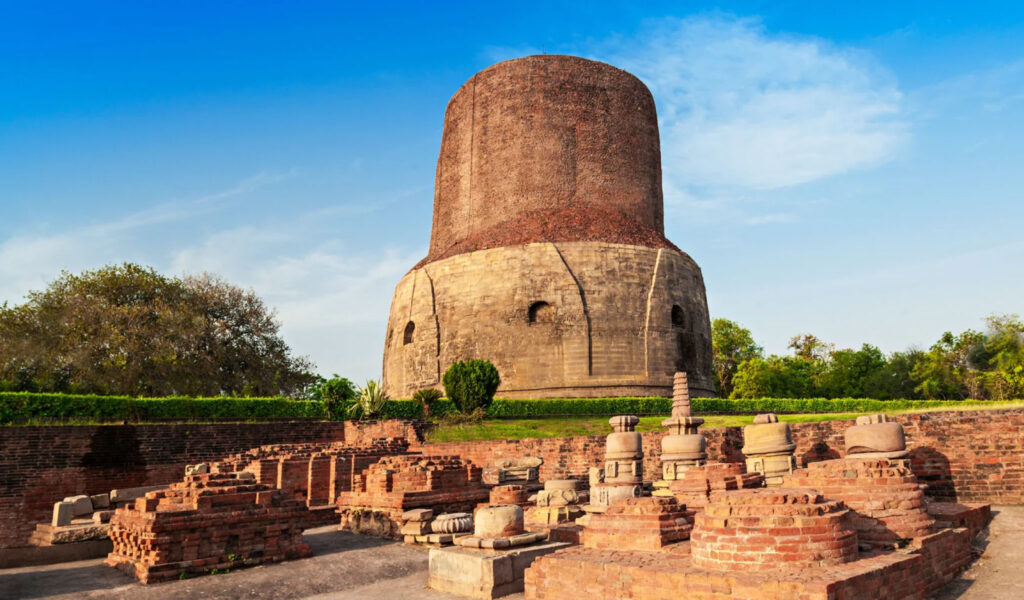
A few kilometres from the spiritual chaos of Kashi lies a world of silence and enlightenment — Sarnath, one of the most famous places in Varanasi. It is here that Gautama Buddha delivered his first sermon, setting in motion the Dhamma Chakra or the “Wheel of Law.” For pilgrims, history lovers, and peace seekers alike, Sarnath stands as a symbol of compassion and awakening.
Whether you explore ancient stupas or serene monasteries, this sacred site is a must on every list of Varanasi visit places, beautifully balancing the mysticism of Hindu Kashi with the calm of Buddhist philosophy.
Where Is Sarnath? (With GPS Coordinates)
📍 Coordinates: 25.3810° N, 83.0220° E
Sarnath is located about 10 km northeast of Varanasi, in Uttar Pradesh, India. It falls under the same spiritual belt as the Kashi Vishwanath Temple and the Ganga Ghats, making it one of the most recommended places of visit in Varanasi for a day excursion.
The site is easily accessible by road and part of most tour guide in Varanasi packages. The entry to the archaeological zone is well-marked, with clear pathways leading to the Dhamek Stupa, Ashokan Pillar, Mulagandha Kuti Vihar, and the Sarnath Museum.
Its proximity to both Varanasi city and the airport makes it an easy half-day trip for travellers.
Mythological & Historical Significance
According to Buddhist tradition, after attaining enlightenment at Bodh Gaya, Buddha travelled to Sarnath to share his newfound wisdom with five ascetic followers. This first discourse, called the Dhammacakkappavattana Sutta, marks the beginning of the Buddhist Sangha — a community of monks that would spread his teachings across Asia.
The name Sarnath is derived from Saranganath, meaning “Lord of the Deer.” Legends say the Buddha once lived here as a deer to save another’s life, symbolising compassion.
Historically, Sarnath thrived under Ashoka the Great, who erected magnificent stupas and the iconic Lion Capital (India’s national emblem today). The site was later visited by Chinese travellers Fa-Hien and Hiuen Tsang, whose writings helped reconstruct its glorious past.
Architecture
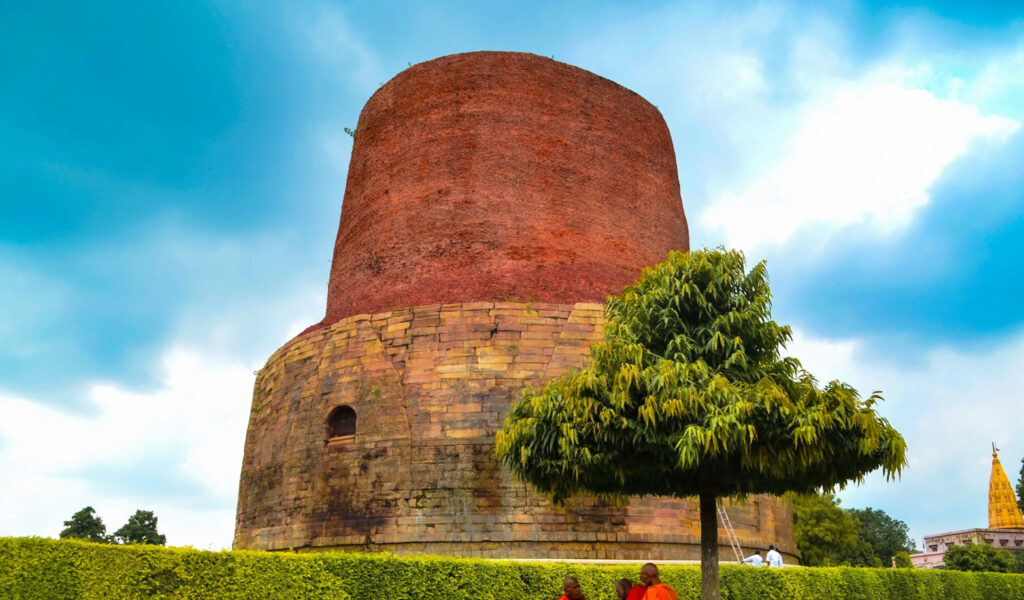
Sarnath is a breathtaking blend of Mauryan, Gupta, and later-Buddhist architectural styles. The centerpiece, the Dhamek Stupa, rises nearly 43 m high with a massive cylindrical base decorated with intricate floral and geometric carvings — remnants of Gupta artistry.
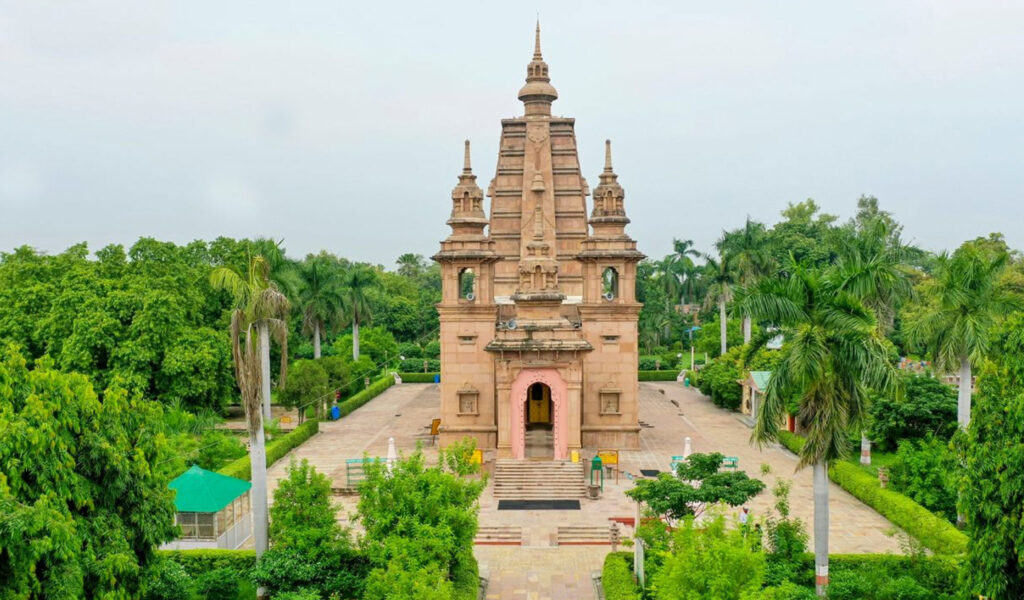
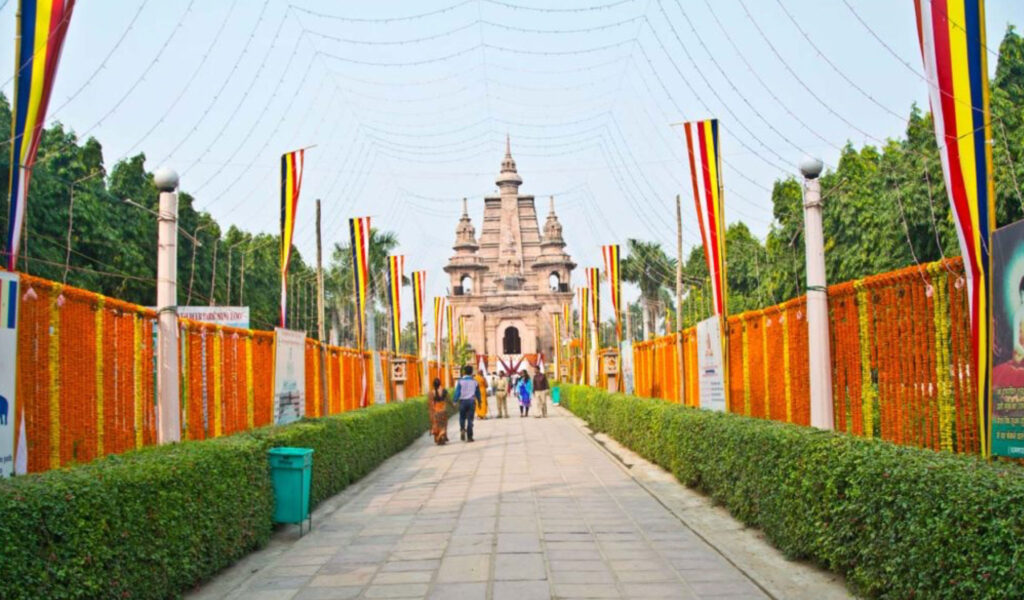
Nearby lie the ruins of ancient monasteries (vihars) and Ashoka’s Pillar, which once bore the famous Lion Capital of India. The Mulagandha Kuti Vihar, built by the Mahabodhi Society in the 20th century, is adorned with murals depicting Buddha’s life, created by Japanese artist Kosetsu Nosu.
The archaeological park is landscaped beautifully, dotted with brick platforms, stone railings, and meditation zones — a serene contrast to the vibrant bustle of Kashi’s ghats.
What You’ll See & Do at Sarnath
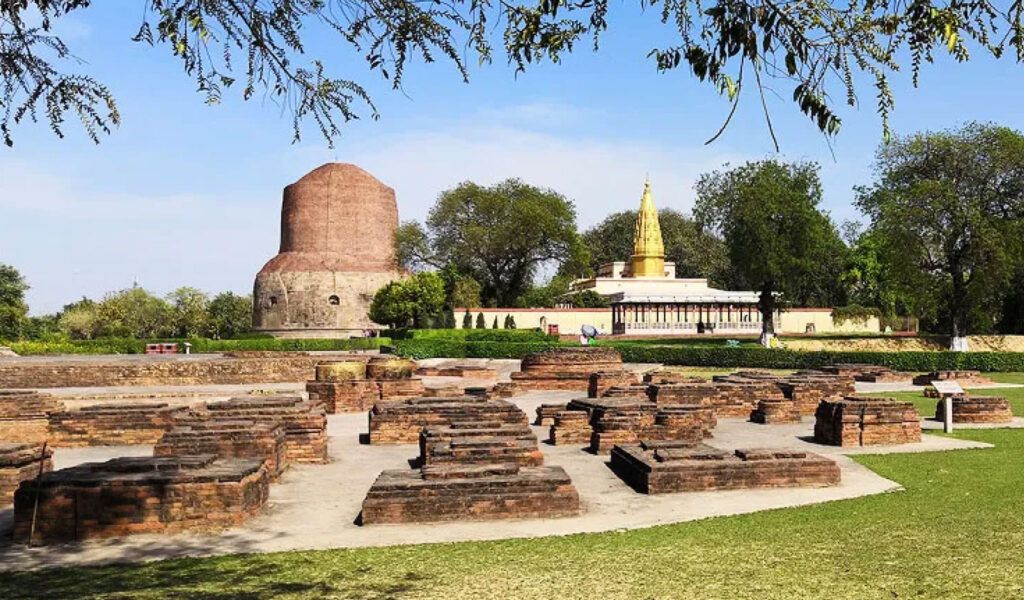
Start your visit at the Dhamek Stupa, where devotees walk clockwise (parikrama) in silent reverence. Don’t miss the Ashokan Pillar Site, where the original capital once stood.
Visit the Sarnath Museum, one of India’s oldest site museums, displaying relics, Buddha sculptures, and Ashokan edicts — especially the sandstone Lion Capital.
Next, explore the peaceful Mulagandha Kuti Vihar and its Bodhi Tree sapling brought from Sri Lanka. Attend the evening chanting ceremony to experience the soothing rhythm of Buddhist hymns.
Hiring a tour guide in Varanasi or at the site can enrich your understanding of each monument’s symbolism and history. Many travellers also enjoy meditating near the gardens — a practice that connects you deeply with the Buddha’s message of mindfulness and compassion.
How to Reach Sarnath
•By Air: Nearest airport — Lal Bahadur Shastri International Airport, Varanasi (24 km).
•By Train: Varanasi Junction and Kashi Railway Station connect major cities; Sarnath also has a small local station.
•By Road: Auto-rickshaws, cabs, and tourist buses run frequently from Varanasi city (30–40 min drive).
The roads are well maintained, and the route passes through local markets and village scenes. For first-time visitors, a certified tour guide in Varanasi ensures smooth navigation and insights into Buddhist heritage.
Sarnath forms part of a perfect spiritual circuit with other Varanasi visit places, such as:
•Kashi Vishwanath Temple: The iconic Shiva shrine, 10 km away.
•Dashashwamedh Ghat: Witness the mesmerizing Ganga Aarti each evening.
•Manikarnika Ghat: Ancient cremation ground symbolizing life and death.
•Ramnagar Fort: A Mughal-style riverside palace and museum.
•Chaukhandi Stupa: A prelude to Sarnath, believed to mark Buddha’s meeting with his disciples.
Together, these make an enriching heritage trail that blends Hindu devotion with Buddhist serenity — two timeless souls of Varanasi.
Best Time to Visit & Travel Tips
The best time to visit Sarnath is October to March, when the weather is cool and pleasant for walking through the archaeological gardens. The Buddha Purnima Festival (May) is a highlight — with chanting, lamps, and processions illuminating the entire complex.
Tips:
•Carry a hat, water bottle, and wear comfortable footwear.
•Photography is allowed in most open areas but restricted inside the museum.
•Visit early morning or late afternoon for soft light and fewer crowds.
•Hire a local tour guide in Varanasi to combine Sarnath with nearby Buddhist circuits like Kushinagar and Bodh Gaya.
Respect the sanctity of the site — maintain silence near stupas and meditation zones.
Suggested Itinerary
Day 1: Arrive in Varanasi → Evening Ganga Aarti at Dashashwamedh Ghat.
Day 2: Morning drive to Sarnath → Visit Dhamek Stupa, Ashokan Pillar, and Sarnath Museum → Lunch near the site → Evening prayers at Mulagandha Kuti Vihar.
Day 3: Explore other places of visit in Varanasi — Kashi Vishwanath Temple, Annapurna Temple, and Bharat Kala Bhavan Museum.
Day 4: Sunrise boat ride → Shopping for Banarasi silks → Departure.
This 3-4 day plan balances spirituality, sightseeing, and cultural immersion.
FAQ – Sarnath, Varanasi
Q1. What is Sarnath famous for?
Sarnath is where Gautama Buddha delivered his first sermon (“Turning the Wheel of Dharma”) after his enlightenment, marking the founding of the Buddhist Sangha.
Q2. How far is Sarnath from Varanasi and how do I get there?
Sarnath is about 10 km northeast of Varanasi city. It is accessible by road from Varanasi’s airport, railway station or by local transport.
Q3. What are the visiting hours and ticketing rules?
The archaeological park and museum have standard opening times (for example 8:00 AM to 6:00 PM noted by the tourism board). Some parts require tickets; the museum is closed on certain days (e.g., Friday).
Q4. Are guided tours or tour guides available at Sarnath?
Yes — local guides are available at the site for hire to walk you through the stupas, museum and monuments. If you’re using a tour guide in Varanasi, you can include Sarnath in your itinerary easily.
Q5. Is photography allowed in Sarnath?
Photography is generally permitted in most open parts of the site, but certain monument interiors or museum galleries may have restrictions (check at entry). The visitor information emphasises following rules and not using flash in sensitive areas.
Q6. What should I wear or what should I know when visiting?
Dress modestly, wear comfortable walking shoes (lots of ruins and open ground). Stay hydrated, especially in warmer months. Respect the heritage site by not defacing monuments — visitor norms ask that you do not scribble on walls or damage surroundings.
Q7. Which months are best to visit Sarnath?
The pleasant weather months from October to March are ideal for sightseeing. Summers can be very hot; planning early morning or late afternoon visits helps. (General travel-guide advice)
Q8. What else can I see near Sarnath?
Besides the stupas and museum, there’s the Deer Park, Buddhist monasteries, the Ashokan pillar and nearby heritage spots in Varanasi. It makes for a good half-day trip from Varanasi’s major hubs.
Q9. Is Sarnath only for Buddhist pilgrims or can non-Buddhists visit too?
Sarnath is open to everyone — history buffs, heritage tourists, spiritual seekers and pilgrims alike. Its value is cultural and historical as much as religious.
Conclusion
Sarnath isn’t just a destination — it’s a moment of stillness where history, faith, and peace meet. From Ashoka’s carved pillars to the hum of monks in prayer, every corner here whispers the Buddha’s timeless message: “Peace comes from within.”
Whether you’re a pilgrim, historian, or seeker of calm, Sarnath is among the most rewarding places of visit in Varanasi.
Let your next spiritual detour from Kashi lead you here — where silence speaks and the Wheel of Dharma still turns.