
Swami Narayan Mandir, Chhapaiya – Birthplace & Spiritual Beacon
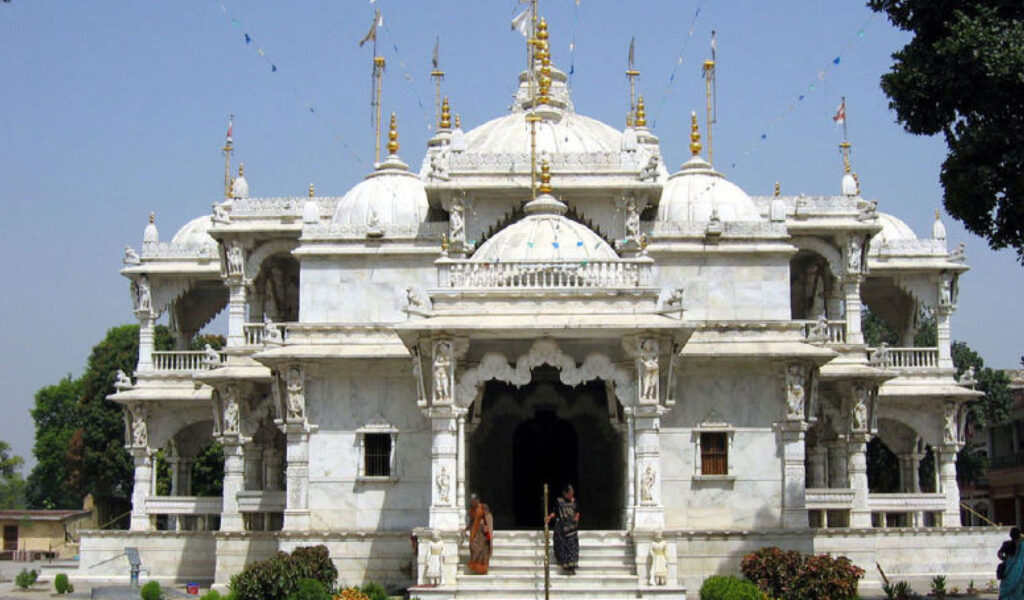
Ayodhya is famed for its temples, ghats, and the stories they carry—yet among its less trodden Ayodhya sightseeing places, the Swami Narayan Mandir in Chhapaiya stands out as a powerful pilgrimage site. Known as the birthplace of Bhagwan Swaminarayan (born Ghanshyam Pande), this temple draws devotees from all over India and abroad. If you’re looking for an Ayodhya tourist spot that combines devotional intimacy, history, and serene rural beauty, Chhapaiya is a must-visit place in Ayodhya tourism.
Where Is Swami Narayan Mandir, Chhapaiya? (with GPS Coordinates)
The Swami Narayan Mandir is situated in Chhapaiya village, in the Gonda district of Uttar Pradesh. This sacred spot lies about 40–60 km from Ayodhya city centre, depending on which road route you take. Despite its proximity to Ayodhya, the temple’s setting is quite different—it rests in a quiet rural landscape, surrounded by fields, ponds, and village life. This peaceful environment makes it a refreshing contrast to the busy temple precincts and ghats of Ayodhya city, offering visitors a chance to experience both spirituality and serenity in one trip.
The village of Chhapaiya is revered because it is the birthplace of Bhagwan Swaminarayan, one of the most influential saints and reformers of modern Hinduism. Today, the temple stands as both a pilgrimage hub and a heritage monument that draws followers from across India and the world.
GPS Coordinates (approximate):
•Latitude: 27.2145° N
•Longitude: 81.9732° E
By pasting these coordinates into Google Maps or your GPS device, you can easily locate the temple and plan your travel route. Roads are motorable, and once you near Chhapaiya village, local signboards and devotees will guide you to the Mandir.
Mythological & Historical Significance of Swami Narayan Mandir, Chhapaiya
Chhapaiya holds immense reverence in the Swaminarayan Sampradaya, as it is the birthplace of Bhagwan Swaminarayan, born in 1781 as Ghanshyam Pande. From his earliest childhood years in this village, stories of his divine powers, miracles, and saintly character began to spread. Legends describe young Ghanshyam displaying extraordinary wisdom, compassion, and spiritual inclination even as a child, setting him apart as destined for a higher mission.
The Mandir in Chhapaiya was later established to commemorate his birth and teachings, making it one of the most sacred Ayodhya sightseeing places for Swaminarayan devotees across the world. Followers believe that every corner of this village—from the ponds where he played and bathed, to the trees under which he meditated—carries the divine presence of Swaminarayan.
Historically, Chhapaiya also became the foundation of Swaminarayan’s spiritual journey. Many of his early activities—like helping villagers, teaching values of truth and non-violence, and performing simple miracles—are rooted here. Over time, as the Swaminarayan movement grew, Chhapaiya turned into a heritage pilgrimage site, drawing both devotees and scholars.
The temple complex has seen several restorations and expansions to accommodate the rising number of pilgrims. Modern renovations have preserved its sanctity while enhancing its facilities. The site today includes sacred sarovars (water bodies), ghats, shrines, and Ghanshyam Bhavan, believed to mark his exact birthplace. These places allow visitors to walk through the very settings where Swaminarayan spent his childhood, connecting them not only to history but to the living faith of millions of devotees.
Architecture of Swaminarayan Mandir, Chhapaiya
The Swaminarayan Mandir in Chhapaiya reflects the distinctive style of Swaminarayan Sampradaya temples—clean lines, spacious courtyards, and shrines centred on the sanctum (garbhagriha). The main temple has a shikhara (spire) rising above the sanctum, adorned with carvings and motifs symbolising purity and devotion. Within the complex are smaller shrines, water bodies (sarovars), and Ghanshyam Bhavan, which commemorates the birthplace of Bhagwan Swaminarayan. The temple uses locally sourced stone and follows a symmetrical plan, ensuring space for large gatherings and festivals. While simpler than massive urban temples, its architecture captures both spiritual warmth and rural authenticity, making it a peaceful Ayodhya place to see.
What You’ll See & Do at Swami Narayan Mandir, Chhapaiya
When you arrive at Chhapaiya to visit this Ayodhya tourist attraction, here are things you shouldn’t miss:
•The Main Swaminarayan Mandir: This temple marks the birthplace of Bhagwan Swaminarayan. Devotees come for darshan (viewing) of the deity, to offer prayers, and to experience the atmosphere of devotion.
•Ghanshyam Bhavan: The house or monument on the spot of Bhagwan Swaminarayan’s childhood; a place with special significance for followers.
•Narayan Sarovar & Other Water Bodies: Sacred water bodies where devotees bathe or perform religious cleansing. These sarovars are often part of the pilgrimage experience.
•Chapaiya Mahotsav / Festivals: Festivals like the Swaminarayan Bhagwan’s birthday and Chhapaiya Mahotsav bring the area to life with rituals, fairs, and devotional gatherings.
•Religious Walks & Quiet Reflection: Because Chhapaiya is rural compared to Ayodhya city, visitors can walk around the village, enjoy the natural surroundings, and explore smaller shrines or local temples connected with the Swaminarayan tradition.
How to Reach Swami Narayan Mandir, Chhapaiya
•By Road: From Ayodhya, Chhapaiya is about 35-60 km by road using routes via Katra Parsurampur or via Mankapur, depending on which side you approach from.
•By Train: The nearest major train station is Mankapur (~15 km from Chhapaiya). From there, you can hire local transport or autos.
•By Air: The closest airports are Lucknow (~150-190 km away) and Gorakhpur (~140-180 km away depending on route). From the airport, you’d take road transport to reach Chhapaiya.
If you make Chhapaiya part of your journey, there are several nearby attractions you can combine:
•Ayodhya City: After Chhapaiya, you can visit major Ayodhya places to see such as Ram Janmabhoomi, Hanuman Garhi, and the Saryu River Ghats.
•Narayan Sarovar & Meen Sarovar: Within Chhapaiya itself; scenic water bodies used for ritual and spiritual cleansing.
•Ghanshyam Bhavan: In Chhapaiya village, very close to the Mandir.
•Gonda District Towns: As Chhapaiya is in Gonda, nearby towns, local markets, and other temples in Gonda make good stops.
•Other Pilgrimage Sites: If traveling regionally, you could also visit places like Shravasti or other Swaminarayan temples in older Sampraday circuits.
Best Time to Visit & Travel Tips
•When: The best months are October through March, when weather is cool and pleasant. Festivals, especially Swaminarayan’s birth anniversary (which is celebrated in Chhapaiya), are very vibrant though potentially crowded.
•Time of day: Early morning brings peace, fewer crowds, cooler temperatures, and better religious ambiance. Evening is also nice for rituals or local lightings.
•What to wear: Modest clothing is appreciated—covering shoulders and legs. Remove shoes before entering temple premises.
•What to carry: Water, sun protection, comfortable walking shoes. Perhaps something to cover your head if needed for sun or for religious respect.
•Accommodation & Facilities: The mandir complex offers the Bhakta Niwas (temple guest house) for devotees with basic amenities. Local food stalls may be present in the village; plan accordingly.
Suggested Itinerary
Here’s a suggested itinerary if you want to make Chhapaiya a part of a day or two-day Ayodhya pilgrimage:
Day 1
•Depart from Ayodhya early morning to Chhapaiya.
•Arrive by mid-morning; visit Swami Narayan Mandir, Ghanshyam Bhavan, Narayan Sarovar.
•Lunch in Chhapaiya village.
•Explore smaller shrines, local markets, take time for quiet reflection in the surroundings.
Day 2
•Return towards Ayodhya. On way or after arriving, visit major Ayodhya sightseeing places like Ram Janmabhoomi, Hanuman Garhi.
•In the evening, enjoy the river-ghats of Saryu, attend aarti, explore local food and culture in Ayodhya.
If short on time, you could do a half-day: depart early, cover Chhapaiya in the morning, return to Ayodhya for second half of the day’s sightseeing.
FAQs – Swami Narayan Mandir, Chhapaiya
1.What is Chhapaiya known for?
Chhapaiya is best known as the birthplace of Bhagwan Swaminarayan (born Ghanshyam in 1781). The village is a major pilgrimage centre for followers of the Swaminarayan Sampradaya.
2.What are the temple’s opening hours?
The Swami Narayan Mandir in Chhapaiya is reported to open at 4:00 AM and remains open until about 9:00 PM.
3.How far is Chhapaiya from Ayodhya / how to reach?
•By road: Ayodhya to Chhapaiya is about 35 km via Katra Parsurampur.
•By train: The nearest major station is Mankapur, about 15 km from Chhapaiya.
•By air: Nearest airports are Lucknow (≈150 km) and Gorakhpur (≈140 km).
4.What are the must-see spots at Chhapaiya Mandir complex?
Key places include:
•The Janmabhoomi (birthplace) Mandir of Bhagwan Swaminarayan
•Narayan Sarovar & Meen Sarovar (sacred ponds) where devotees bathe or reflect
•Ghanshyam Bhavan (childhood home of Bhagwan Swaminarayan)
•Local shrines and gardens within the temple complex
5.When is the best time to visit Chhapaiya Mandir / festivals there?
•The ideal time is around April, which is the birth anniversary of Bhagwan Swaminarayan, when large numbers of devotees gather.
•Also, cooler months (October-March) are more comfortable for travelling and visiting.
6.Are there accommodation and amenities nearby?
Yes. The temple trust provides Bhakta Niwas in Chhapaiya for devotees. There are also food facilities, basic water and rest amenities. However, being a rural area, facilities are more basic than in cities. It is good to plan ahead.
7.Is digital payment / cash accepted locally?
Many reports suggest that in Chhapaiya, local shops, donations, prasad, etc., may require cash, as digital payment infrastructure is limited. Carry cash to be safe.
8.What should visitors carry when going to Chhapaiya Mandir?
Some essentials:
•Cash for offerings, prasad, local purchases.
•Modest clothing, possibly something for sun/rain protection depending on season.
•Good footwear, as walking may be involved between shrines and sarovars.
•Water, snacks especially if you plan to stay longer or during festivals.
9.Can non-devotees visit the temple?
Yes. The temple welcomes visitors of all faiths who wish to experience the heritage, architecture, and spiritual atmosphere. There is no restriction that you must be a follower.
10.What is the spiritual or philosophical message of Swaminarayan that visitors should know?
Bhagwan Swaminarayan taught virtues like truth (satya), non-violence (ahimsa), devotion (bhakti), purity of life, and social reform. His childhood miracles and teachings are central to the faith, and many devotees come to Chhapaiya to connect with these values.
Conclusion
Swami Narayan Mandir, Chhapaiya is a jewel among Ayodhya places to see that combines the devotion of the Swaminarayan tradition, historical roots, and serene rural ambiance. Whether you are a pilgrim, spiritual traveler, or someone who seeks meaningful travel beyond popular temples, Chhapaiya gives you peace, ritual, and a story unlike any other. Make it part of your Ayodhya travel plan—you’ll find that this spiritual birthplace elevates your pilgrimage, bringing depth to Ayodhya’s tourist attractions beyond the obvious.